
Debt is a big problem in the U.S., with 63% of people unable to handle a $500 emergency. This guide helps you understand debt and find financial freedom. Over 77% of families have debt, often from credit cards with balances of $8,000.
Money worries affect 60% of people, but this guide shows how to manage them. Learning about personal finance and improving your financial literacy can help you overcome debt. This guide offers steps to tackle student loans, medical bills, and everyday expenses, helping you take back control of your finances.
Key Takeaways
- 63% of Americans lack emergency funds for a $500 crisis.
- Financial literacy boosts confidence by 20% when prioritized.
- Structured budgets reduce debt by 30% through disciplined tracking.
- 75% of people ignore their spending, leading to recurring debt.
- Delayed gratification increases long-term stability by 30% compared to impulsive spending.
The Modern Debt Crisis: Why So Many Americans Struggle
Debt can hit anyone, thanks to easy credit. Over 80% of Americans have debt, with the average household owing $90,460. This problem isn’t just personal—it’s a big issue in our economy and culture.
The Widening Gap Between Income and Cost of Living
Rising costs are outpacing wages, pushing families into debt. Here are some numbers to think about:
- Millennials: $87,448 debt
- Gen Z: $16,043 debt
- Student loans alone hit $1.56 trillion
| Generation | Average Debt |
|---|---|
| Gen Z | $16,043 |
| Millennials | $87,448 |
| Gen X | $140,643 |
| Baby Boomers | $97,290 |
The Normalization of Debt in American Culture
“Debt is the new normal,” says financial expert John Smith. “Credit cards and loans are marketed as lifelines, not risks.”
Many people don’t know how to manage money well. Less than 25% of Millennials understand basic money management. Ads make luxury seem easy, hiding the dangers of credit card debt.
How Credit Card Companies Target Vulnerable Consumers
Credit card companies take advantage of people who don’t know much about money. They use:
- Targeted marketing to students and young professionals
- Penalty fees hidden in fine print
- Encouraging minimum payments to extend interest cycles
Why people fall into debt often starts with tricks by credit card companies. Millennials have $1.5 trillion in student loans and 40% use credit for basic needs like groceries.
Debt isn’t just about bad choices—it’s a system where easy credit meets high costs. Knowing this is the first step to getting out of debt.
Understanding Debt: From Struggles to Financial Freedom
Debt isn’t always bad. But not understanding it can lead to big problems. Over 80% of Americans have debt, often from high-interest credit cards or loans. The first step to financial independence is knowing the types of debt you have:
| Type | Examples |
|---|---|
| Secured Debt | Mortgages, auto loans (collateral required) |
| Unsecured Debt | Credit cards, medical bills (no collateral) |
| Revolving Debt | Credit cards (variable balances) |
| Installment Debt | Student loans, car loans (fixed payments) |
Interest adds up every day on unpaid balances. For example, a $5,000 credit card balance at 16% APR could cost over $800 in interest annually. This understanding debt: from struggles to financial freedom journey requires knowing how interest works against you—and in your favor when investing.
Financial independence starts with:
- Tracking every dollar spent
- Choosing debt payoff methods (avalanche vs. snowball)
- Building an emergency fund (3-6 months’ expenses)
NFCC counselors say to pay off high-interest debts first to stop compounding. Small steps like negotiating lower rates or consolidating loans can help. Remember, financial freedom isn’t about avoiding debt entirely, but using it wisely. Start today to take back control.
Common Reasons People Fall Into Financial Hardship
Debt can hit anyone, especially with so much credit available. Life events can lead to financial troubles, even for the most careful. Here are four main reasons for financial struggles:
Medical Emergencies and Healthcare Costs
Medical debt is a leading cause of bankruptcy. Even with insurance, 25% of U.S. adults struggle with bills. Emergency visits or ongoing health issues can quickly use up savings, leading to credit card use.
Job Loss and Income Instability
Job loss can double debt. The APA says 72% of Americans worry about money. Those in the gig economy, without steady pay, find it hard to pay bills.
Education Expenses and Student Loans
Student loans average $30,000. Many delay big life steps like buying homes or starting families. 40% can’t handle a $400 emergency, so they turn to credit cards.
Lifestyle Inflation and Keeping Up With the Joneses
Lifestyle inflation leads to overspending. Social media makes it hard to resist keeping up. 70% admit spending more than they make, creating debt. Credit cards seem like a quick fix.
These reasons show how debt comes from life events and bigger issues. Starting an emergency fund and making a budget are key steps to get back on track. Debt can hit anyone—knowing why helps break the cycle.
The Psychological Impact of Debt on Your Wellbeing
Understanding debt is key to financial freedom. It affects more than just money; it impacts sleep, relationships, and focus. Over 30% of U.S. adults face financial struggles, leading to anxiety or depression. Lack of financial knowledge makes things worse, as shame keeps people quiet.
Debt anxiety is real and measurable. Studies show it can lead to emotional exhaustion, poor sleep, and even heart disease. For instance, 11% of households can’t afford food, and 20% struggle to pay rent. This stress affects work and family life, causing a chain reaction.
Debt can affect anyone, especially in a world filled with easy access to credit.
Shame keeps people trapped. Financial struggles are seen as personal failures, but this is a lie. The stigma stops people from getting help, even from groups like the National Foundation for Credit Counseling (NFCC). Treating debt like a health issue can help break the cycle of shame.
- Practice mindfulness or journaling to reduce stress
- Reframe negative thoughts using cognitive-behavioral techniques
- Seek support through financial advisors or mental health professionals
Dealing with personal finance challenges is possible. Begin by facing your feelings without shame. Use resources like AnnualCreditReport.com and the FTC’s guides to take action. Remember, mental and financial health are connected. Improving one can help the other, leading to a more stable life.
Assessing Your Current Financial Situation: The First Step to Freedom
Debt management begins with understanding your finances. Start by making a list of all your debts, including credit cards, loans, and medical bills. Note down the balances, interest rates, and when they are due. This list shows where you are on your journey to financial freedom.
- Track all debts in a spreadsheet or app, noting interest rates, and calculate total owed.
- Record monthly income and every expense—from rent to coffee—to identify spending patterns.
- Use free tools like Mint or Excel to automate calculations and monitor progress visually.
| Tool Type | Features |
|---|---|
| Spreadsheet | Customizable formulas, offline access |
| App-Based | Real-time updates, budget alerts |
Financial advisors suggest checking your data weekly. For example, tracking your spending can reduce monthly expenses by 10-15%. This can help you pay off debt faster. Begin by asking yourself, “Where does every dollar go?”
“Honesty about your finances is the foundation of change,” says certified financial planner Sarah Thompson. “Ignoring balances only delays progress.”
After documenting your finances, you can create a plan to pay off your debts. Focus on high-interest debts first, as they cost a lot more over time. This approach helps you reach your financial goals, whether it’s clearing $15,000 in credit card debt or tackling student loans. Every step you take today brings you closer to financial freedom tomorrow.
Creating Your Personalized Debt Elimination Strategy
Choosing the right debt elimination strategies starts with knowing your financial habits and goals. The Avalanche and Snowball methods are well-known. Hybrid plans can fit your unique needs. Begin by creating a debt repayment plan that matches your motivation and financial goals.

Avalanche Method: Save More Over Time
Target debts with the highest interest rates first. For example, credit cards with 16% interest grow quickly. This means paying $11 daily on a $9,000 balance. Pay the minimum on other debts while focusing on the highest-rate one. This method saves you money in interest over time, perfect for those focused on long-term savings.
Snowball Method: Win Small to Stay Motivated
Begin with the smallest debts to build confidence. Paying off a $500 balance quickly boosts your motivation. This approach is great for those who need quick successes to stay on track. Studies show 60% of people stick to their budget longer when they see progress.
Hybrid Approaches: Blend for Balance
Combine both methods based on your financial situation. Pay extra on high-interest debts while tackling smaller balances for motivation. Debt management experts often suggest this for complex financial situations. For example, someone with $81,000 in student loans might use Avalanche for credit cards and Snowball for smaller medical bills.
Regardless of the debt management method you choose, staying consistent is key. Review your plan every month and make changes as needed. Your strategy should be realistic for today, not perfect for tomorrow.
Budgeting Techniques That Actually Work in Real Life
Starting with a budgeting method that suits your lifestyle is key. Experts suggest the 50/30/20 rule: spend 50% on needs like rent and food, 30% on wants, and 20% on savings or debt. This makes it easier to focus on your financial goals without getting overwhelmed.
| Method | How It Works | Best For |
|---|---|---|
| 50/30/20 | Divides income into needs, wants, and savings | Steady income earners |
| Zero-Based Budgeting | Assigns every dollar earned to a category (e.g., bills, savings) | Irregular income or detailed tracking needs |
| Envelope System | Cash allocated to physical envelopes for categories | Physical spending limits |
Zero-based budgeting means every dollar is accounted for. Users of tools like EveryDollar save an average of $332 monthly by tracking expenses. Adding automatic savings boosts your savings. Adjusting your budget as your life changes keeps it realistic and effective.
Beyond Cutting Back: Increasing Your Income to Tackle Debt
Increasing your income is a great way to manage debt faster. With the average U.S. household having $8,000 in credit card debt at 16% interest, more money can cut down repayment times. Financial freedom comes when you earn more in a way that fits your lifestyle and skills.
“You don’t have a money problem—you have an income problem.” — Financial journalist Suze Orman
Here are three ways to increase your income while keeping your life balanced:
- Side Hustles: Use platforms like Uber or Upwork for flexibility. A 10-hour/week job that earns $200/month can save $2,400 a year on debt.
- Skill-based Income: If you’re good at coding, freelance on Guru. Creative types can sell art on Etsy. Start small, like tutoring on Preply.
- Career Leverage: Check salaries on PayScale to ask for raises. Getting certified in IT or healthcare can increase your earnings by 15-30%.
| Strategy | Startup Cost | Time Commitment | Monthly Potential |
|---|---|---|---|
| Freelancing | $50–$200 | 10–20 hours/week | $300–$1,000 |
| Raise Negotiation | Free | 1–2 hours prep | 5–10% salary increase |
Combine income growth with smart debt repayment plans. Even $200 a month from a side job can clear $2,400 in credit card debt in a year. Focus on paying off high-interest debts first to save more. Use Personal Capital or Mint apps to track how extra income helps you reach your financial goals. Remember, financial freedom is about working smarter, not harder.
Debt Consolidation and Refinancing: When They Make Sense
Debt consolidation can make payments easier and cut down on interest. But it’s not right for everyone. Before picking debt relief solutions, look at your financial situation. For instance, moving from a 20.09% credit card rate to a 12.37% personal loan can save a lot. But, watch out for hidden fees and terms.
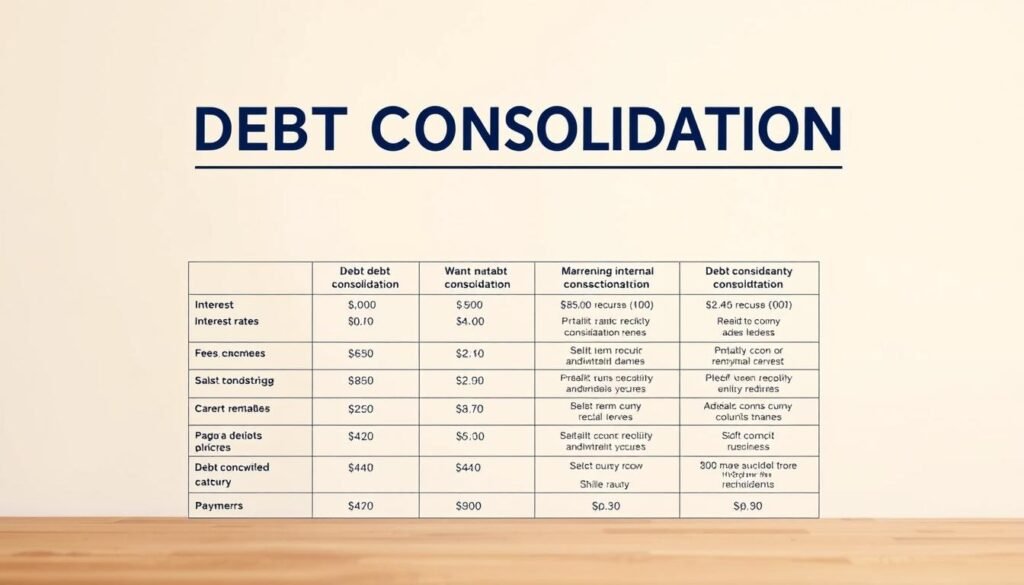
- Personal Loans: Rates range from 8.99% to 29.99% (like LightStream’s 6.99%–25.29%). Those with a 670+ credit score usually get better rates.
- Balance Transfers: You can get 0% intro APR for up to 21 months. But, there are fees (3%–5%) and a minimum credit score (690+) needed.
- Debt Management Plans: Nonprofit agencies can help lower payments. But, late payments can still hurt your credit score.
A debt consolidation loan won’t fix overspending. It’s a tool, not a cure.
Let’s look at the numbers: A $9,000 debt at 25% APR costs $2,500 in interest over two years. But, a 17% loan could save you $820. Remember, origination fees (1%–10%) and terms (up to seven years) matter. Those with scores below 629 face higher rates, which might cancel out savings.
Be careful of traps: Missing payments can raise APRs and hurt your credit score. Some loans let you borrow more than you need, tempting you to spend too much. Always pair debt management with a budget. Focus on changing your spending habits, not just the numbers.
Building Healthy Financial Habits for Long-Term Success
Getting out of debt is just the beginning. To stay financially stable, focus on habits that make small choices add up. Start by setting up an emergency fund that matches your income.
Emergency Fund Strategies That Prevent Future Debt
Start with a personal finance plan that builds a safety net. Aim for 3–6 months’ expenses in a liquid account. Here’s a simple guide:
- Low-Income Households: Start with $500, then scale up as income grows.
- Middle-Income Families: Target 6 months’ expenses to cover emergencies like job loss.
- High-Income Earners: Pair emergency funds with diversified investments for growth.
Mindful Spending Practices
“Wealth is what you do with your income long before you’re rich.” — David Bach
Follow the 50/30/20 budget rule to balance spending:
- 50% Needs: Rent, utilities, groceries
- 30% Wants: Dining out, hobbies, travel
- 20% Savings/Debt: Retirement, emergency funds
Teaching Financial Literacy
Share knowledge to break cycles of debt. Use this guide to educate children and adults:
| Age Group | Key Lessons |
|---|---|
| Children 5–12 | Allowance systems, saving jars for “spend,” “save,” “give” |
| Teens | Bank accounts, budgeting apps, part-time work |
| Adults | Workshops on credit scores, retirement planning, tax strategies |
Building financial literacy ensures future generations avoid common traps. Prioritize transparency about money decisions to foster financial independence.
From Debt Management to Wealth Building: The Next Phase
Reaching debt-free is just the beginning. The discipline from debt management is now key for growing wealth. Think about using money once spent on payments to buy assets that make money over time.
“Wealth isn’t about how much you earn—it’s about how you use what you have.”
Start by setting goals with these steps:
- Automate savings: Set up automatic transfers to retirement accounts like 401(k)s or IRAs.
- Protect with an emergency fund: Aim for 3–6 months of expenses to avoid new debt.
- Invest in appreciating assets: Explore low-cost index funds, real estate, or education to boost earning potential.
Many face personal finance hurdles like fear of risk or market ups and downs. Start with a small, diverse portfolio. For example, investing $100 monthly in S&P 500 index funds at 7% annual returns grows to over $30,000 in 20 years. Check your progress every quarter and adjust as your income or goals change.
Getting help from a certified financial planner (CFP) can make big decisions clearer. They help match investments with financial independence goals, whether for retirement, a home, or education. Tools like budget calculators and robo-advisors make it simple to start, even with little money.
Conclusion: Your Journey to Financial Freedom Starts Today
Your journey to financial independence starts with small steps. You can tackle high-interest debt or student loans with the right plan. Start by looking at your monthly spending and find ways to cut costs.
For example, cooking at home can save you $240 a month. Every dollar you save goes straight to paying off your debt. This will help you move closer to understanding debt: from struggles to financial freedom.
Financial freedom isn’t about being perfect. Many millionaires save in 401(k) plans, showing even small savings can add up. Start building an emergency fund with just $1,000 to avoid debt when unexpected bills come.
If medical debt is a problem, look into nonprofit credit counseling. Every little change, like using coupons or negotiating bills, helps in the long run.
Find inspiration in those who’ve changed their financial lives. Start by automating your debt payments or saving $50 a week. Telling a friend about your goals can keep you on track. Financial freedom is within reach with consistent effort. Start today and move closer to a life where money doesn’t control you.
FAQ
What are the primary causes of debt in America?
How can I create an effective debt repayment plan?
What budgeting techniques are most effective for debt management?
Are debt consolidation options worth considering?
How important is emotional well-being in managing debt?
What role does financial literacy play in avoiding debt?
How can I increase my income to help pay off debt?
What steps can I take to build healthy financial habits?
Source Links
- Financial Freedom Made Easy: Step-by-Step Guide to Elim… – https://www.goodreads.com/book/show/221111558-financial-freedom-made-easy
- How to Become Debt Free: Solutions & Strategies – https://www.lewis.cpa/blog/how-to-get-out-of-debt
- How To Get Out Of Debt – The Complete Guide – https://www.financialmentor.com/financial-advice/how-to-get-out-of-debt/9458
- How many americans are in debt and what can you do if you’re feeling the frustrations of the debt crisis – https://www.creditninja.com/blog/young-american-debt-crisis/
- The U.S. Consumer Debt Crisis – https://www.debt.org/faqs/americans-in-debt/
- From Debt To Millionaire: A Strategic Path To Financial Freedom – https://www.forbes.com/sites/melissahouston/2024/05/24/from-debt-to-millionaire-a-strategic-path-to-financial-freedom/
- How To Get Out of Debt and Gain Financial Freedom | The NFCC – https://www.nfcc.org/blog/conquering-debt-practical-tips-for-financial-freedom/
- Coping with Financial Stress – HelpGuide.org – https://www.helpguide.org/mental-health/stress/coping-with-financial-stress
- Common causes of debt – https://www.nortonfinance.co.uk/know-how/debt-management/common-causes-of-debt
- 10 Warning Signs Of Financial Trouble – https://mnpdebt.ca/en/resources/mnp-debt-blog/10-warning-signs-of-financial-trouble
- The Relationship Between Financial Worries and Psychological Distress Among U.S. Adults – https://pmc.ncbi.nlm.nih.gov/articles/PMC8806009/
- How Can Debt and Money Issues Impact Your Mental Health? | Equifax – https://www.equifax.com/personal/education/credit-cards/articles/-/learn/impacts-debt-mental-health/
- A Guide to Getting Out of Debt – https://www.iccreditunion.org/insights-resources/getting-out-of-debt-guide/
- What Financial Freedom Means & How to Achieve It – https://www.moneyfit.org/financial-freedom-means/
- Ultimate Guide to Creating Your Own DIY Debt Management Plan | MMI – https://www.moneymanagement.org/budget-guides/create-a-diy-debt-repayment-program
- How To Get Out of Debt – https://consumer.ftc.gov/articles/how-get-out-debt
- How to Budget Money: A Step-By-Step Guide – NerdWallet – https://www.nerdwallet.com/article/finance/how-to-budget
- 15 Practical Budgeting Tips – https://www.ramseysolutions.com/budgeting/the-truth-about-budgeting?srsltid=AfmBOopVmBClsdbEjdVOCSCxENrKoZx9GTCcx6soA_9E3iBCgjKg7R88
- How To Get Out of Debt in 8 Steps – https://www.investopedia.com/personal-finance/digging-out-of-debt/
- 15 Ways to Achieve Financial Freedom – https://www.ramseysolutions.com/retirement/what-is-financial-freedom?srsltid=AfmBOootlrlvi_GlHRpBQkm-k2a48j_Yf0quxtO5EMcyAmxkheth_jVW
- Is Debt Consolidation A Good Idea? Consider The Pros & Cons | Bankrate – https://www.bankrate.com/personal-finance/debt/pros-and-cons-of-debt-consolidation/
- The Pros and Cons of Debt Consolidation – NerdWallet – https://www.nerdwallet.com/article/loans/personal-loans/pros-and-cons-debt-consolidation
- How to Reach Financial Freedom: 12 Habits to Get You There – https://www.investopedia.com/articles/personal-finance/112015/these-10-habits-will-help-you-reach-financial-freedom.asp
- 6 ways to reduce money stress. – https://www.fultonbank.com/Education-Center/Saving-and-Budgeting/6-ways-to-build-financial-discipline
- Achieving Financial Freedom: Steps to Build Wealth and Live the Life You Want – https://place.com/real-estate-business/achieving-financial-freedom-steps-to-build-wealth/
- Debt Consolidation Strategies: A Path to Financial Freedom – EastRise – https://www.eastrise.com/blog/debt-consolidation-strategies-a-path-to-financial-freedom/
- Your Ultimate Debt Management Guide | SUCCESS – https://www.success.com/ultimate-guide-to-debt-management/
- Your Journey to Financial Freedom: A Step-by-Step Guide… – https://www.goodreads.com/book/show/66098781
- 15 Ways to Achieve Financial Freedom – https://www.ramseysolutions.com/retirement/what-is-financial-freedom?srsltid=AfmBOoqkUjBIaBpXQJrIa9D7aoIQ8oOTPIUR0BnsCudHRQ1riR034Usc