
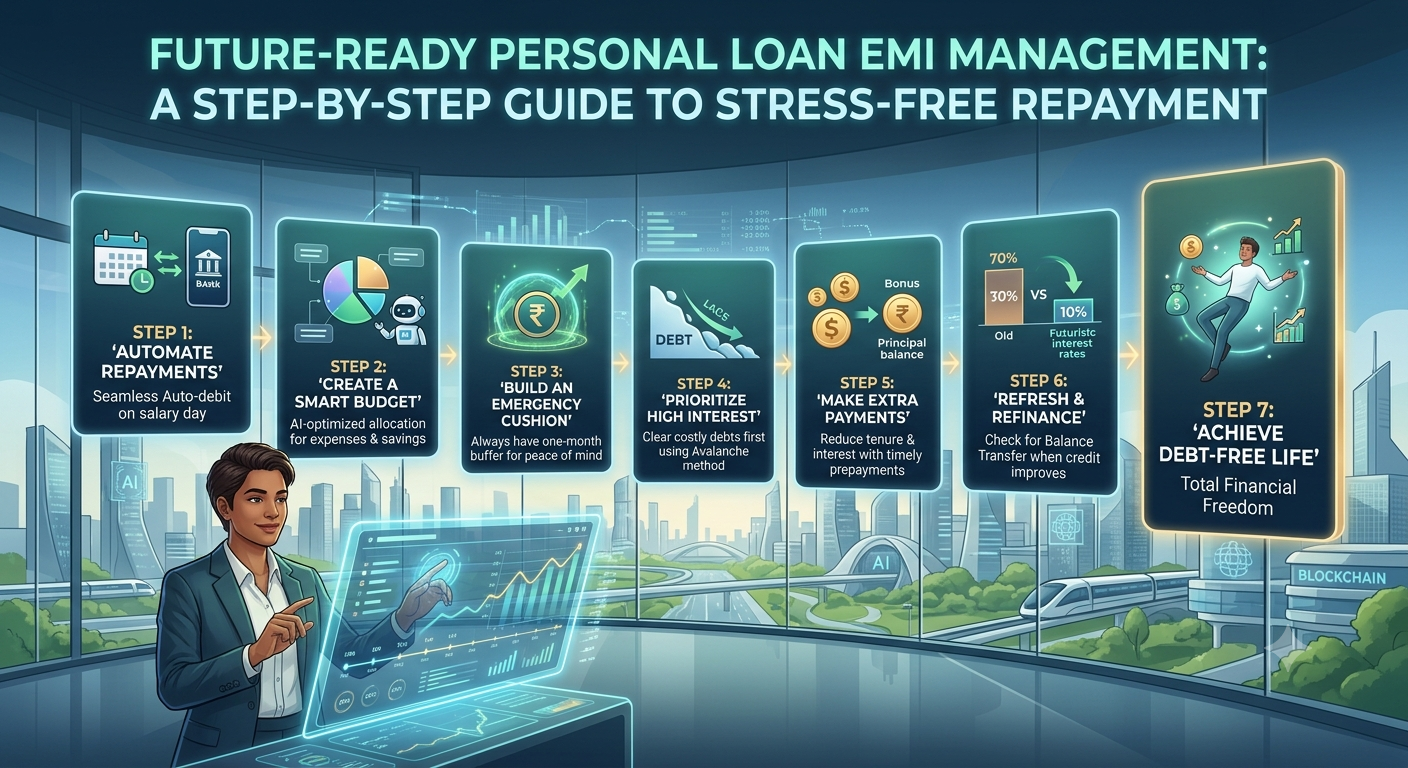
How to Manage Personal Loan EMI: A Step-by-Step Guide to Stress-Free Repayment
Personal loans are one of the most accessible unsecured financing options available today. Whether it is funding an unexpected medical emergency, covering home renovation expenses, or consolidating higher-interest debts, personal loans offer quick liquidity. However, because they are unsecured, they carry higher interest rates compared to home or vehicle loans. Without a structured repayment strategy, monthly Equated Monthly Installments (EMIs) can quickly strain your monthly budget and derail your long-term financial stability.
Managing your personal loan EMI efficiently isn’t just about paying on time—it is about minimizing your total interest payout, maintaining a healthy credit profile, and preserving your cash flow for daily living and wealth building.
Here is a comprehensive, practical roadmap to master your personal loan obligations without compromising your lifestyle.
1. Understand How Your EMI is Calculated
Before implementing a management strategy, you must understand how your monthly commitment is structured. A personal loan EMI comprises two components: the principal repayment and the interest charge.
$$\text{EMI} = P \times r \times \frac{(1 + r)^n}{(1 + r)^n – 1}$$
(Where P = Loan Amount, r = Monthly Interest Rate, n = Loan Tenure in Months)
Because of the amortization curve, interest charges form the largest portion of your EMI during the initial months of the loan. As time progresses, the principal component increases while the interest portion declines. Therefore, any intervention (like prepayments or balance transfers) yields the highest savings when done early in the loan tenure.
💡 Calculate Your Monthly Commitment Accurately
Before taking on a loan or adjusting your repayment plan, map out your exact monthly outlay using our dedicated calculator tool:
2. Adhere to the 35% Debt-to-Income Rule
A primary cause of loan default is over-leveraging—allocating too much of your monthly income to fixed debt payments. Financial planners strongly advise keeping your total monthly debt obligations within safe limits.
- The Recommended Threshold: Your aggregate loan EMIs (including credit cards, car loans, and personal loans) should never exceed 35% to 40% of your net monthly take-home income.
- Why It Matters: Conserving 60% or more of your monthly income ensures you have adequate liquidity for fixed expenses (rent, groceries, utilities), discretionary spending, and emergency savings.
| Monthly Net Income | Maximum Total EMI Limit (35%) | Safe Allocation for Expenses & Savings |
| ₹50,000 | ₹17,500 | ₹32,500 |
| ₹80,000 | ₹28,000 | ₹52,000 |
| ₹1,20,000 | ₹42,000 | ₹78,000 |
3. Automate Repayments and Build a Buffer
Missing an EMI payment results in severe consequences: late payment penalties (typically ₹400–₹500 per bounce), bank clearance bounce fees, and an immediate negative impact on your CIBIL/credit score.
- Align EMI Dates with Payday: Schedule auto-debits via NACH/ECS 2 to 3 days after your salary credit date. If you receive your salary on the 1st, set your auto-debit for the 3rd or 4th to account for bank holidays or minor processing delays.
- Maintain a 1-Month EMI Cushion: Keep an amount equal to at least one full EMI permanently in your primary bank account as a buffer zone. This prevents accidental bounces caused by unexpected payroll delays.
4. Implement the “Prepayment Trick” to Slash Total Interest
Making partial prepayments toward your personal loan principal is one of the fastest ways to reduce your debt burden. Even modest extra contributions significantly curtail total interest charges and shorten the loan tenure.
Example Strategy: Pay just one extra EMI per year or increase your regular EMI contribution by 5% annually using performance bonuses, tax refunds, or festival gifts. Because personal loan interest is front-loaded, prepaying within the first 12–24 months cuts your effective interest burden dramatically.
Always instruct your lender to apply partial prepayments directly toward the principal balance and choose to shorten the remaining loan tenure rather than lowering the EMI amount, as this maximizes total interest savings.
5. Apply the Debt Avalanche Method for Multiple Debts
If you are managing a personal loan alongside other high-interest debts like credit card balances, structure your repayment schedule using the Debt Avalanche Strategy:
- List all outstanding debts along with their respective annual interest rates (APR).
- Ensure minimum monthly payments are maintained on all accounts to avoid default fees.
- Direct all remaining discretionary funds toward the debt carrying the highest interest rate (usually credit card debt at 36–42% APR, followed by personal loans at 12–18% APR).
- Once the costliest debt is cleared, roll the full payment amount into the next highest interest rate balance.
6. Leverage Balance Transfers or Refinancing
If your credit score has improved substantially since you initially secured the loan, or if prevailing market interest rates have decreased, your current interest rate may be uncompetitive.
- Personal Loan Balance Transfer: Transfer your remaining loan balance to a new lender offering a significantly lower interest rate. A reduction of even 2% to 3% can yield substantial net savings over a 3- to 5-year tenure.
- Evaluate Net Benefits: Factor in prepayment penalties from the existing lender and processing fees from the new lender before proceeding to ensure the net savings outweigh the transfer costs.
7. Emergency Protocols: What to Do If Facing Financial Distress
If you face unforeseen financial disruptions—such as job loss, income reduction, or an urgent medical emergency—never ignore bank communications or allow EMIs to bounce silently.
- Proactive Communication: Approach your lender immediately prior to the payment due date. Explain the situation transparently with supporting documentation.
- Request Restructuring: Lenders prefer restructuring over outright defaults. You can request options such as:
- A temporary loan moratorium (EMI pause for 2–3 months).
- Tenure extension to reduce monthly EMI commitments to a manageable level.
- Conversion of the outstanding balance into a structured repayment plan.
Key Takeaway
Managing a personal loan EMI requires consistency, strategic planning, and automated discipline. By keeping your debt-to-income ratio in check, making occasional prepayments, and using tools like the Debtless Life EMI Calculator, you can pay off your debts efficiently without compromising your long-term wealth creation goals.
Also Read – How to Check and Improve Your CIBIL Score for Free (2026 Guide)


