
Debt Snowball vs. Debt Avalanche: Which Strategy Works Best for Indian Borrowers?
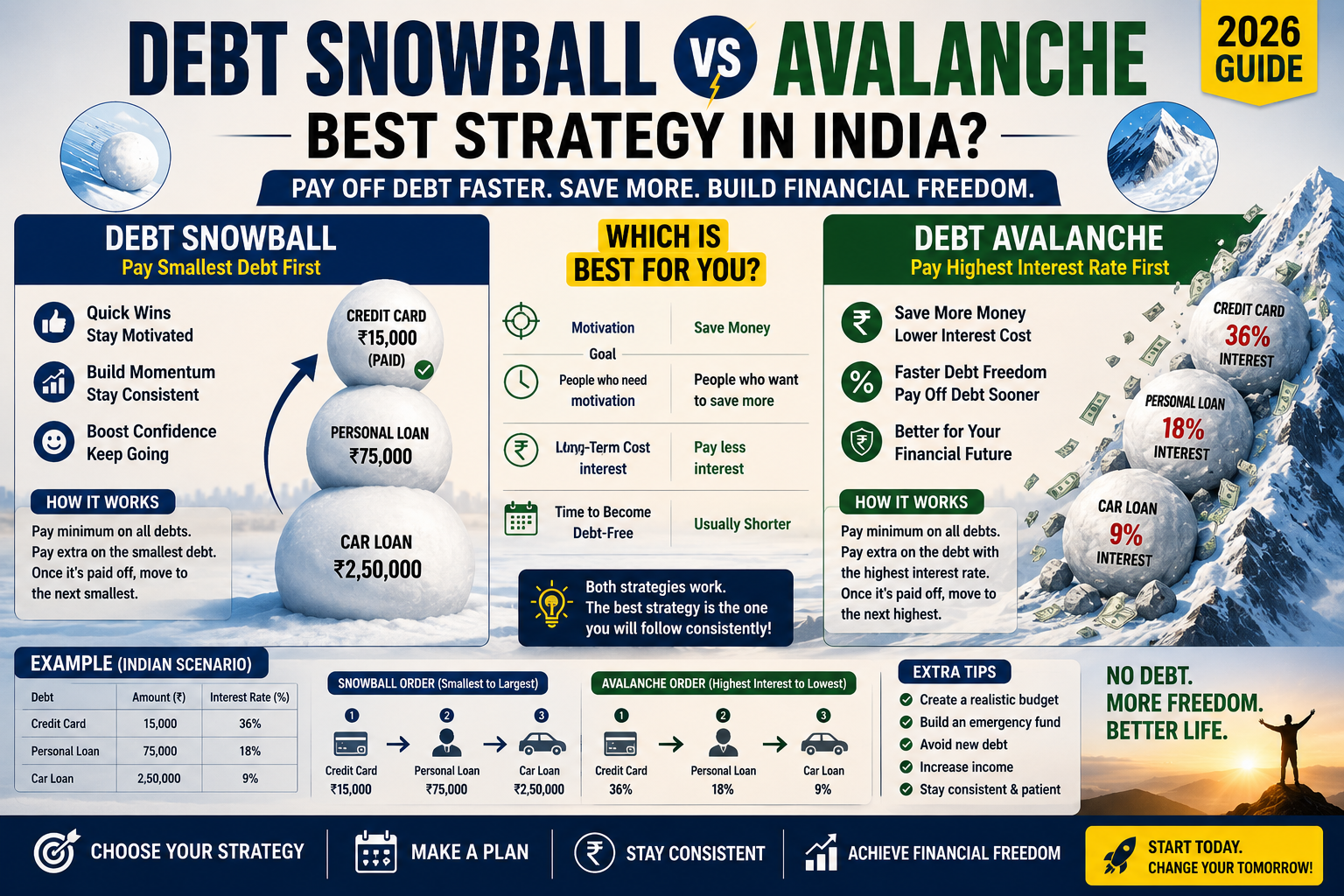
Managing multiple EMIs across credit cards and personal loans can quickly become overwhelming. Choosing the right structured repayment framework—either the Debt Snowball or the Debt Avalanche method—is critical to clearing outstanding liabilities efficiently.
Both strategies require paying minimum dues on all accounts while directing extra funds toward one specific debt. However, they prioritize debts using completely different logic.
The Methodologies Compared

Method 1: The Debt Snowball (Psychology-First)
The Debt Snowball strategy focuses on building behavioral momentum by eliminating your smallest debts first.
How It Works:
- List all debts from the smallest outstanding balance to the largest, regardless of interest rates.
- Pay the minimum required installment on every account.
- Throw all extra available cash toward the smallest balance.
- Once the smallest balance reaches zero, roll the amount you were paying into the next-smallest debt.
Example: Clearing a small ₹15,000 buy-now-pay-later (BNPL) balance gives you an immediate sense of accomplishment, encouraging you to tackle larger ₹1,500,000 personal loans next.
Method 2: The Debt Avalanche (Math-First)
The Debt Avalanche strategy optimizes your payments purely based on interest rates, minimizing total interest paid over time.
How It Works:
- List all debts from the highest interest rate (APR) to the lowest.
- Pay the minimum required installment on every account.
- Allocate all extra funds exclusively to the highest-interest debt.
- Once that high-cost debt is fully cleared, direct the full allocation toward the debt with the next-highest rate.
Example: Credit cards charging 42% per annum take absolute priority over a personal loan charging 12% per annum, saving significant money on compounding finance charges.
Which Works Best for Indian Borrowers?
For most Indian households balancing credit card dues (36%–42% APR) alongside personal loans (11%–16% APR), the Debt Avalanche strategy provides clear financial advantages:
- Massive Interest Reduction: Credit card finance charges compound daily/monthly. Eliminating a 42% APR credit card balance first halts compounding interest immediately.
- Faster Overall Timeline: By stopping high-interest leakage, every rupee works harder toward clearing the principal balance.
When to Choose Snowball Instead: If managing multiple small debts causes severe psychological stress, or if past debt repayment attempts failed due to loss of motivation, start with the Snowball method to build momentum before transitioning to the Avalanche approach.
Related Resources & Tools
- Master our complete framework in our primary guide: How to Pay Off Credit Card & Personal Loans Fast in India
- Calculate your exact timeline using our interactive Debt Payoff Calculators


